How to Choose the Right LED Strip Light for Your Project
Choosing the right lighting starts with knowing how to choose LED strip lights for your project. The right LED strip can provide the brightness, colour, efficiency and appearance you need for a home, kitchen, commercial space or outdoor installation.
Before you buy, you should compare the LED type, voltage, wattage, brightness, colour temperature, CRI and IP rating. You should also check the required LED driver, aluminium profile, connectors and maximum run length.
This guide explains how to choose LED strip lights for different applications and how to avoid common installation mistakes.
What Should You Consider Before Buying LED Strip Lights?
Before choosing an LED strip, consider these key factors:
- LED technology
- Voltage
- Wattage
- Brightness
- Colour temperature
- CRI
- IP rating
- Strip width
- Maximum run length
- Voltage drop
- Power supply
- Aluminium profile
- Indoor or outdoor location
- Control options
The best LED strip light is not always the one with the highest wattage. Instead, you need to match the strip to the application.
1. Choose the Right LED Strip Type: COB or SMD
The first decision is choosing between COB and SMD LED strip technology.
COB LED Strip Lights
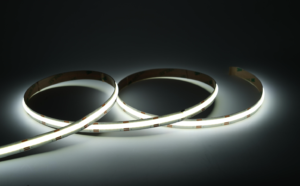
COB stands for Chip on Board. COB strips place many LED chips close together along the strip.
This creates a smooth and continuous line of light with very few visible dots.
COB LED strips are a popular choice for:
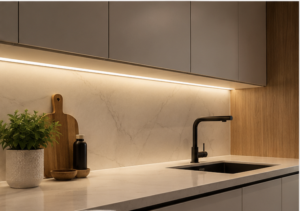
- Kitchen cabinets
- Shelving
- Joinery
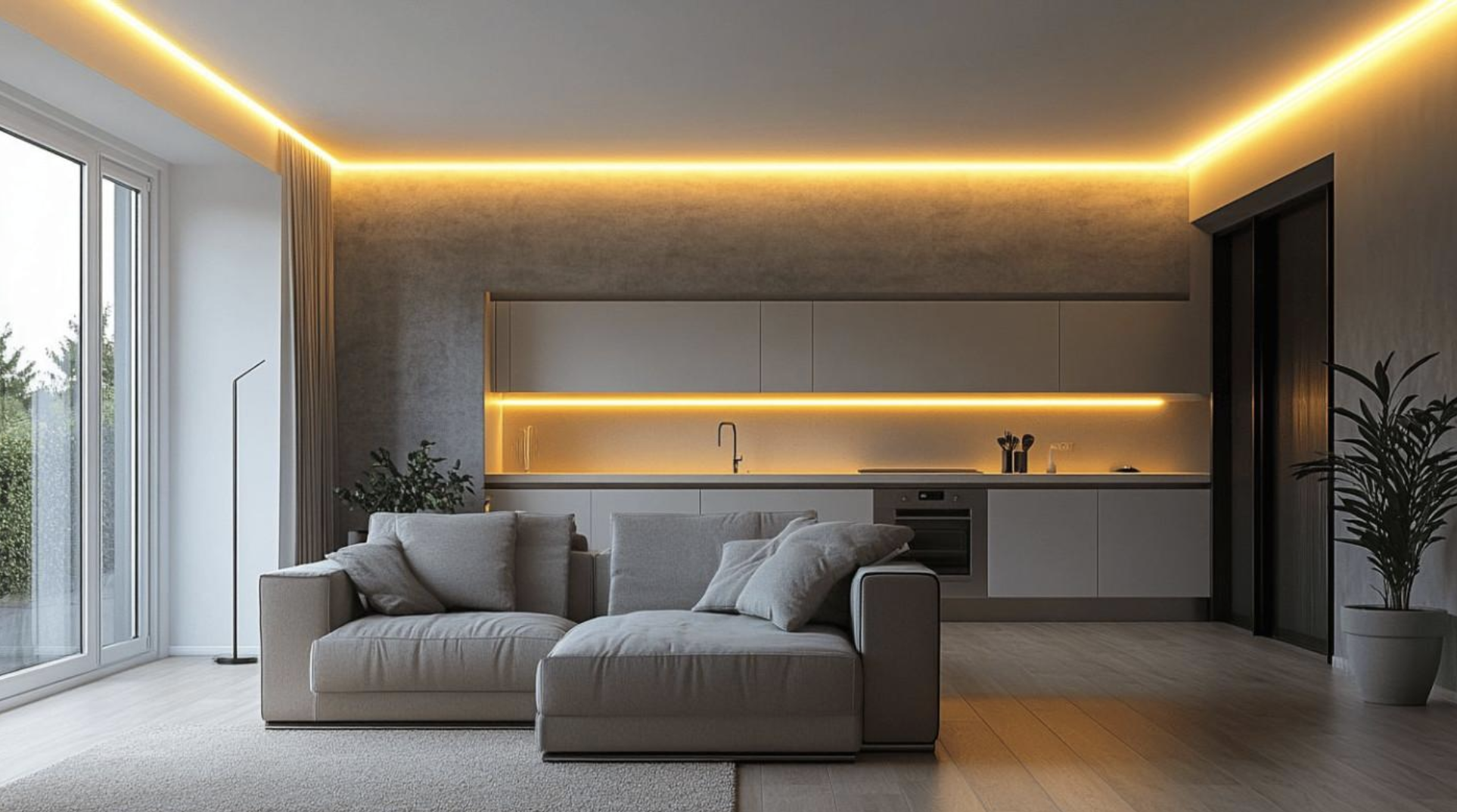
- Cove lighting
- Architectural lighting
- Display lighting
- Commercial interiors
- Feature lighting
For applications where you want a smooth line of light, a COB LED strip is often an excellent choice.
Learn more in our guide to COB LED strip lights.
SMD LED Strip Lights
SMD strips use individual LED packages mounted along the circuit board.
They are available in many wattages, colours and configurations. They can be suitable for general lighting, decorative lighting, commercial projects and applications where the strip is installed inside a diffuser or aluminium profile.
COB vs SMD LED Strip Lights
| Feature | COB LED Strip | SMD LED Strip |
|---|---|---|
| Light appearance | Smooth and continuous | Individual LED points may be visible |
| Dot-free effect | Excellent | Depends on LED density and diffuser |
| Flexibility | Excellent | Good |
| Applications | Architectural, cabinets, joinery | General and decorative lighting |
| High CRI options | Available | Available |
| Aluminium profile | Recommended for many installations | Recommended for many installations |
For a clean, modern lighting effect, COB is often the preferred option.
2. Choose the Correct Voltage: 12V vs 24V
LED strip lights are commonly available in 12V and 24V versions.
For many larger installations, 24V LED strip lights are a practical choice because they use less current for the same power.
For example, a 120W load requires:
| System | Voltage | Power | Current |
|---|---|---|---|
| 12V | 12V | 120W | 10A |
| 24V | 24V | 120W | 5A |
The calculation is:
Power ÷ Voltage = Current
Therefore:
120W ÷ 12V = 10A
120W ÷ 24V = 5A
Lower current can make power distribution and cable sizing easier in many installations.
However, voltage alone does not determine the maximum run length. Always check the manufacturer’s specifications for the particular LED strip.
For larger projects, 24V is commonly used because it can be well suited to longer installations when the strip is designed for them.
Read our detailed guide:
24V vs 12V LED Strip Lights: Which Should You Choose?
3. Choose the Right Brightness and Wattage
LED strip wattage is normally shown as watts per metre.
For example:
- 8W/m
- 10W/m
- 12W/m
- 15W/m
- 20W/m
A higher wattage can mean more electrical power is used, but it does not automatically mean the strip is brighter.
Brightness should be compared using the manufacturer’s lumen output.
Where Different Wattages Can Work
8W/m
Suitable for:
- Decorative lighting
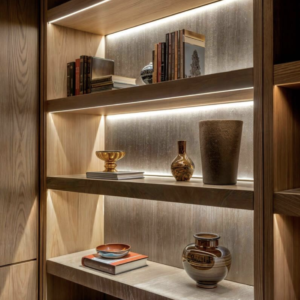
- Shelves
- Joinery
- Accent lighting
- Low-level applications
10W/m
Suitable for:
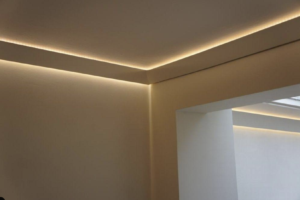
- General architectural lighting
- Cabinets
- Cove lighting
- Commercial applications
15W/m
Suitable for:
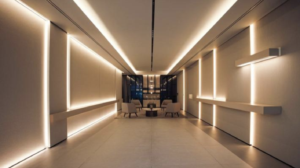
- Higher-output applications
- Architectural lighting
- Commercial projects
- Areas requiring stronger illumination
20W/m
Suitable for:
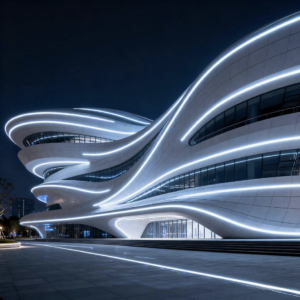
- High-output lighting
- Commercial projects
- Architectural installations
- Applications requiring strong continuous illumination
High-wattage LED strips produce more heat, so good thermal management becomes more important.
4. Choose the Right Colour Temperature
Colour temperature is measured in Kelvin, or K.
Common LED strip colour temperatures include:
| Colour Temperature | Appearance | Common Applications |
|---|---|---|
| 2700K | Warm white | Homes, hospitality, decorative lighting |
| 3000K | Warm white | Kitchens, homes, restaurants |
| 3500K | Soft neutral | Retail and interiors |
| 4000K | Neutral white | Offices, kitchens, commercial areas |
| 5000K | Cool white | Work areas and commercial spaces |
| 6500K | Daylight white | Workshops, utility areas and specific commercial applications |
For residential projects, 3000K is a popular choice because it creates a warm and comfortable appearance.
For workspaces and commercial areas, 4000K can provide a cleaner neutral appearance.
If you need flexibility, consider a CCT or tunable-white LED strip.
5. Check the CRI Rating
CRI means Colour Rendering Index.
It measures how accurately a light source shows colours compared with a reference light source.
A higher CRI generally provides better colour rendering.
For example:
- CRI 80+: suitable for many general applications
- CRI 90+: excellent for homes, retail and architectural lighting
High-CRI LED strips are especially useful in:
- Kitchens
- Retail stores
- Showrooms
- Restaurants
- Hotels
- Art displays
- Joinery
- Architectural projects
If accurate colour appearance is important, look for an LED strip with CRI 90+.
6. Choose the Correct IP Rating
If your LED strip will be exposed to moisture, dust or water, the IP rating is important.
Common ratings include IP20, IP65, IP67 and IP68.
| IP Rating | General Protection | Typical Application |
|---|---|---|
| IP20 | Basic indoor protection | Dry indoor areas |
| IP65 | Protection against dust and water jets under test conditions | Sheltered outdoor areas and areas exposed to spray |
| IP67 | Protection against temporary immersion under specified test conditions | Wet and exposed locations |
| IP68 | Continuous immersion according to specified conditions | Special applications where manufacturer approval allows |
An IP rating applies to the product under its specified test conditions. It does not automatically mean the complete lighting system is waterproof.
The connectors, joins, end caps, cable entries, driver and controller also need suitable protection.
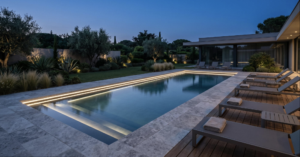
For outdoor applications, also consider UV exposure, heat, direct sunlight and the installation environment.
IP65 LED Strip Lights
IP65 strips can be useful where the strip needs protection from dust and water spray.
They can work well for:
- Sheltered outdoor areas
- Decorative lighting
- Architectural lighting
- Kitchens
- Commercial interiors
IP67 LED Strip Lights
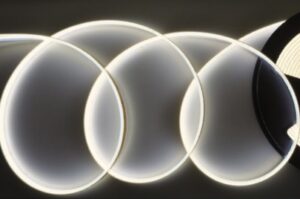
IP67 provides a higher level of water protection and is suitable for applications where temporary immersion may occur, provided the product is designed and tested for that use.
IP68 LED Strip Lights
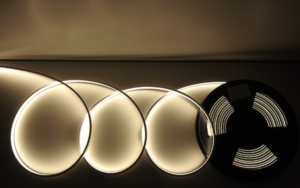
IP68 products can provide protection for continuous immersion under manufacturer-defined conditions.
Always check the manufacturer’s specifications before using an IP68 strip underwater.
7. Choose the Right LED Strip Width
LED strip width is another important consideration.
Common widths include:
- 8mm
- 10mm
- 12mm
- Other specialised widths
The strip width must match the aluminium profile, connector and accessories.
For example, if you use a 10mm LED strip, choose connectors and profiles that are designed for that width.
Always check the product dimensions before purchasing accessories.
8. Check the Maximum Run Length
Do not assume that every LED strip can run continuously for the same distance.
Maximum run length depends on factors such as:
- LED strip design
- Wattage
- Voltage
- PCB design
- Current
- Installation method
- Cable size
- Power injection
- Manufacturer specifications
For a long installation, calculate the total load and check the recommended maximum run.
For larger projects, the strip may need to be divided into several sections.
9. Understand Voltage Drop
Voltage drop happens when the voltage decreases along the LED strip or cable.
It can cause:
- Lower brightness
- Uneven lighting
- Colour changes
- Reduced performance
Voltage drop becomes more important on long runs and high-power LED strips.
You can reduce voltage drop by using suitable installation methods, such as:
- Shorter strip sections
- Correct cable sizing
- Suitable power injection
- Feeding the strip from appropriate points
- Using a suitable voltage system
- Following the manufacturer’s installation instructions
This is one reason why correct planning is important before starting a long LED strip installation.
10. Choose the Correct LED Driver
The LED driver must match the LED strip voltage.
For example:
24V LED strip → 24V constant-voltage driver
Do not connect a 24V LED strip directly to a 12V driver.
Likewise, never connect a 12V strip to a 24V power supply unless the product is specifically designed for that voltage.
How to Calculate Driver Size
First calculate the total LED strip power.
For example:
10m × 10W/m = 100W
The LED load is therefore 100W.
It is good practice to select a suitable driver with enough capacity for the installation rather than operating the driver continuously at its maximum rating.
For example, Vesta Lines offers 24V drivers in different power levels for LED strip applications.
The driver should also be installed in a location and environment suitable for its IP rating and electrical requirements.
11. Do You Need an Aluminium Profile?
For many LED strip installations, an aluminium profile is highly recommended.
The profile can:
- Help remove heat
- Protect the LED strip
- Improve installation appearance
- Provide a mounting channel
- Hold a diffuser
- Create a cleaner finished edge
This becomes especially important with higher-power strips.
For example, a 20W/m LED strip produces considerably more heat than a lower-power decorative strip.
A suitable aluminium profile helps manage this heat.
The profile width must also match the LED strip.
12. Choose LED Strip Lights for Indoor Projects
Indoor projects normally have more flexibility because the strip may not need high water protection.
Popular indoor applications include:
- Kitchen cabinets
- Wardrobes
- Shelving
- Entertainment units
- Stairs
- Ceilings
- Cove lighting
- Joinery
- Display cabinets
- Feature walls
For many indoor applications, a COB LED strip can provide a clean, continuous line of light.
13. Choose LED Strip Lights for Outdoor Projects
Outdoor installations require more planning.
Consider:
- IP rating
- Direct rain
- Water exposure
- UV exposure
- Temperature
- Heat
- Cable protection
- Connectors
- End caps
- Power supply location
An IP-rated LED strip should be installed according to the manufacturer’s instructions.
Do not rely on the strip’s IP rating alone. The complete system needs to be suitable for the environment.
14. Choosing LED Strip Lights for Kitchens
LED strips are widely used in kitchens.
Common applications include:
- Under-cabinet lighting
- Over-cabinet lighting
- Pantry lighting
- Shelving
- Kickboard lighting
- Island feature lighting
For kitchen task lighting, consider a strip with good brightness and a high CRI.
A 3000K or 4000K strip can work well depending on the desired appearance.
For a premium, seamless appearance, COB LED strip lights are a strong option.
15. Choosing LED Strip Lights for Commercial Projects
Commercial projects often require more detailed planning.
Applications include:
- Retail stores
- Shopping centres
- Restaurants
- Hotels
- Offices
- Showrooms
- Reception areas
- Display cabinets
- Architectural features
For commercial installations, consider:
- Light output
- CRI
- Colour temperature
- Operating hours
- Heat management
- Voltage
- Maximum run length
- Driver capacity
- IP rating
- Control system
For long commercial installations, 24V LED strip systems are often a practical choice when supported by the product design.
16. LED Strip Light Power Calculation
Before buying the LED driver, calculate the total power.
Use this formula:
Total Power = LED Strip Length × Watts per Metre
For example:
20m × 10W/m = 200W
The LED load is 200W.
You then need to select a compatible 24V constant-voltage driver with suitable capacity.
Always check the manufacturer’s specifications before finalising the driver.
17. Common LED Strip Buying Mistakes
Avoid these common mistakes when choosing LED strip lights.
Choosing the Wrong Voltage
A 12V strip requires a suitable 12V supply.
A 24V strip requires a suitable 24V supply.
Choosing by Wattage Alone
Higher wattage does not automatically mean better lighting.
Compare lumen output, CRI and the application.
Ignoring Heat
High-power LED strips require good thermal management.
An aluminium profile can help.
Ignoring Voltage Drop
Long runs can suffer from voltage drop.
Plan the power feed before installation.
Using the Wrong IP Rating
A dry indoor strip may not be suitable for outdoor or wet environments.
Forgetting the Accessories
Remember to allow for:
- LED driver
- Aluminium profile
- Diffuser
- Connectors
- End caps
- Cable
- Controllers
- Dimmers
Cutting Waterproof Strip Without Resealing
Cutting an encapsulated waterproof strip can compromise its protection.
Follow the manufacturer’s instructions for cutting and sealing.
18. LED Strip Light Buying Checklist
Before purchasing your LED strip, check:
☐ Indoor or outdoor location
☐ Required voltage
☐ LED technology
☐ Wattage per metre
☐ Brightness / lumen output
☐ Colour temperature
☐ CRI
☐ IP rating
☐ Strip width
☐ Total length
☐ Maximum run length
☐ Voltage drop
☐ LED driver
☐ Aluminium profile
☐ Connectors
☐ Controller or dimmer
☐ Installation method
This checklist can help prevent expensive installation mistakes.
19. Vesta Lines LED Strip Light Options
Vesta Lines offers a range of LED strip lighting options for residential, commercial and architectural applications.
Our range includes different COB LED strip options, including:
8W COB LED Strip
A lower-power option suitable for applications such as decorative lighting, joinery, cabinets and indoor architectural lighting.
10W COB LED Strip
A versatile option for general architectural and decorative applications.
IP65 COB LED Strip
Suitable for applications where additional protection against dust and water spray is required.
IP67 COB LED Strip
Designed for applications requiring higher water protection.
IP68 COB LED Strip
Suitable for applications where the product is specifically approved for continuous immersion under the manufacturer’s stated conditions.
15W and 20W COB LED Strip
Higher-output options for applications requiring stronger illumination.
When selecting a Vesta Lines LED strip, always check the individual product specifications for voltage, wattage, dimensions, colour temperature, CRI, IP rating and recommended installation method.
20. Where to Buy LED Strip Lights in Australia
When buying LED strip lights in Australia, choose a supplier that can provide more than just the strip.
A complete lighting solution may include:
- LED strip
- 24V LED driver
- Aluminium profile
- Diffuser
- Connectors
- Controllers
- Dimmers
- Installation accessories
Vesta Lines supplies LED strip lighting and related accessories for residential, commercial and architectural projects.
For larger projects, it is also useful to confirm the strip specifications and installation requirements before ordering.
Frequently Asked Questions
What is the best LED strip light?
The best LED strip depends on the project. Consider brightness, wattage, colour temperature, CRI, voltage, IP rating, installation location and maximum run length.
Is 24V better than 12V LED strip?
Not always. However, 24V can be a practical choice for many larger installations because the same power requires less current. The maximum run still depends on the specific LED strip.
Are COB LED strips better than SMD?
COB strips provide a very smooth, continuous light appearance and are excellent for applications where visible LED dots are not wanted. SMD strips remain useful for many general and decorative applications.
What wattage LED strip should I use?
It depends on the required brightness and application. Common options include 8W/m, 10W/m, 12W/m, 15W/m and 20W/m. Compare the actual lumen output as well as wattage.
What colour temperature is best for a kitchen?
3000K and 4000K are popular choices. 3000K gives a warmer appearance, while 4000K provides a more neutral white light.
Is CRI 90 good for LED strip lights?
Yes. CRI 90+ is a good choice when accurate colour rendering is important, especially in kitchens, retail stores, showrooms and architectural applications.
What IP rating do I need for outdoor LED strips?
It depends on the level of exposure. IP65, IP67 and IP68 provide different levels of water protection. Always match the product to the actual environment and follow the manufacturer’s specifications.
Do LED strip lights need an aluminium profile?
Not every installation requires one, but aluminium profiles are highly recommended for many applications. They help manage heat, protect the strip and provide a cleaner installation.
How do I calculate the LED driver size?
Multiply the LED strip length by its wattage per metre.
For example:
20m × 10W/m = 200W.
Then select a compatible constant-voltage driver with suitable capacity.
Can I connect a 12V LED strip to a 24V driver?
No. The power supply voltage must match the LED strip unless the product is specifically designed for another voltage.
How long can an LED strip run?
There is no single maximum length for every LED strip. It depends on the strip design, voltage, wattage, PCB, cable, power feed and manufacturer’s specifications.
Can I use LED strip lights outdoors?
Yes, if the LED strip and complete installation are suitable for outdoor conditions. Check the IP rating and protect the driver, connectors, joins and cable entries as required.
Conclusion
Choosing the right LED strip light starts with understanding your project.
First, decide where the strip will be installed. Then choose the correct LED technology, voltage, wattage, brightness, colour temperature, CRI and IP rating.
For a smooth and continuous appearance, COB LED strip lights are an excellent option. For larger installations, 24V systems can provide practical power distribution. For outdoor applications, choose the correct IP protection and make sure the complete installation is suitable for the environment.
Do not forget the supporting components. The correct LED driver, aluminium profile, connectors and control system are just as important as the LED strip itself.
If you are unsure which LED strip is suitable for your project, check the product specifications or contact Vesta Lines for assistance.
| What to Check | What to Look For | Typical Choice |
|---|---|---|
| LED technology | COB or SMD | COB for smooth dot-free light |
| Voltage | 12V or 24V | 24V for many larger projects |
| Wattage | 8W–20W/m+ | Depends on required output |
| Colour temperature | 2700K–6500K | 3000K or 4000K for many projects |
| CRI | CRI 80+, 90+ | CRI 90+ for better colour rendering |
| IP rating | IP20, IP65, IP67, IP68 | Depends on environment |
| Strip width | 8mm, 10mm, 12mm etc. | Match profile and connectors |
| Run length | Manufacturer specification | Plan long runs carefully |
| Driver | Correct voltage and capacity | 24V constant voltage for 24V strips |
| Aluminium profile | Recommended for many installations | Especially useful for high-power strips |
| Controls | Dimmer, RGB, CCT, smart control | Depends on lighting requirements |