How to Choose the Right LED Strip Light for Your Project
Choosing the right lighting starts with knowing how to choose LED strip lights for your project. The right LED strip can provide the brightness, colour, efficiency and appearance you need for a home, kitchen, commercial space or outdoor installation.
Before you buy, you should compare the LED type, voltage, wattage, brightness, colour temperature, CRI and IP rating. You should also check the required LED driver, aluminium profile, connectors and maximum run length.
This guide explains how to choose LED strip lights for different applications and how to avoid common installation mistakes.
What Should You Consider Before Choosing LED Strip Lights?
LED strip lights are available in many different specifications. Therefore, choosing the right product requires more than simply selecting the brightest strip.
Before you choose LED strip lights, consider:
- LED technology
- Voltage
- Wattage per metre
- Light output
- Colour temperature
- CRI
- IP rating
- Strip width
- Maximum continuous run
- Voltage drop
- LED driver
- Aluminium profile
- Installation location
- Control options
The best LED strip depends on how and where you plan to use it.
How to Choose LED Strip Lights: COB vs SMD
COB and SMD are two common LED strip technologies.
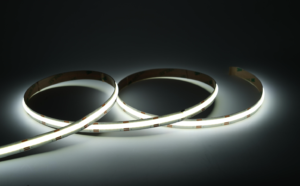
COB LED strips have many small LED chips mounted closely together. This creates a smooth, continuous line of light with minimal visible spotting.
SMD LED strips use individual LED packages mounted along the strip. Depending on the LED density and diffuser, individual points of light may be more visible.
| Feature | COB LED Strip | SMD LED Strip |
|---|---|---|
| Light appearance | Smooth and continuous | Individual LED points may be visible |
| Visible dots | Very low | Can be visible |
| Best for | Joinery, profiles, architectural lighting | General and decorative lighting |
| Flexibility | High | High |
| Profile use | Recommended for heat management and finish | Recommended for heat management and finish |
| Typical applications | Kitchens, cabinets, cove lighting | General lighting, signage and decorative lighting |
If a clean, dot-free appearance is important, COB LED strip lights are often a strong choice.
You can explore the Vesta Lines LED strip light range to compare different options.
How to Choose Between 12V and 24V LED Strip Lights
Voltage is another important factor when you choose LED strip lights.
The most common options are 12V and 24V.
For the same power, a 24V system draws less current than a 12V system.
For example:
120W ÷ 12V = 10A
120W ÷ 24V = 5A
This can make 24V LED strip systems practical for longer or larger installations. However, the maximum recommended run still depends on the specific LED strip design.
Do not connect a 12V LED strip to a 24V power supply. Always match the LED strip voltage with the correct driver or power supply.
For more information, see our guide on 24V vs 12V LED strip lights.
How to Choose LED Strip Light Wattage and Brightness
Wattage tells you how much electrical power the LED strip uses per metre. However, wattage alone does not tell you exactly how bright a strip will be.
For a more accurate comparison, check the lumens per metre as well as the wattage.
Common LED strip wattages include:
| Wattage | Typical Application |
|---|---|
| 8W/m | Decorative lighting, shelves, joinery and accent lighting |
| 10W/m | General architectural lighting, cabinets and cove lighting |
| 15W/m | Higher-output architectural and commercial lighting |
| 20W/m | High-output commercial and architectural installations |
8W/m – Decorative Lighting
8W/m LED strip lights are suitable for applications where you need subtle and controlled illumination.
Common applications include:
- Shelving
- Joinery
- Display cabinets
- Accent lighting
- Decorative features
- Low-level lighting
10W/m – General Architectural Lighting
10W/m LED strips provide a useful balance between power consumption and light output.
They can be suitable for:
- Kitchen cabinets
- Cove lighting
- Joinery
- Architectural details
- Retail displays
- General decorative lighting
15W/m – Higher Output Lighting
15W/m LED strip lights are suitable when more light output is required.
They can be used for:
- Architectural lighting
- Commercial projects
- Larger joinery installations
- Stronger cove lighting
- Areas requiring higher illumination
20W/m – High-Output Lighting
20W/m LED strip lights are designed for applications that require stronger and more continuous illumination.
They can be suitable for:
- Commercial projects
- Architectural installations
- High-output cove lighting
- Large lighting features
- Areas requiring strong continuous illumination
Higher-wattage LED strips can generate more heat. Therefore, proper aluminium profile installation and heat management are important for reliable performance.
How to Choose LED Strip Lights by Colour Temperature
Colour temperature changes the appearance and atmosphere of a space. When you choose LED strip lights, consider whether you want a warm, neutral or cool appearance.
2700K vs 3000K vs 4000K vs 6500K LED Strip Lights
| Colour Temperature | Appearance | Common Applications |
|---|---|---|
| 2700K | Very warm white | Bedrooms, lounges, hospitality and decorative lighting |
| 3000K | Warm white | Kitchens, living areas, joinery and accent lighting |
| 4000K | Neutral white | Offices, kitchens, retail and commercial spaces |
| 5000K | Cool natural white | Work areas, retail and task lighting |
| 6500K | Cool daylight | Workshops, garages, warehouses and commercial areas |
2700K – Warm and Relaxing
2700K produces a warm and comfortable appearance. It can work well in bedrooms, lounges, restaurants and hospitality environments.
3000K – Warm White
3000K is a popular choice for residential projects. It works well under kitchen cabinets, inside joinery, along stairs and in living areas.
4000K – Neutral White
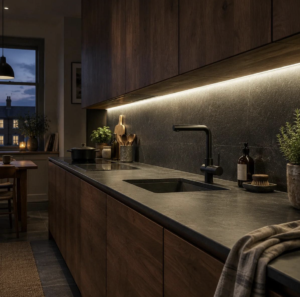
4000K provides a clean and balanced appearance. It is suitable for kitchens, offices, retail stores, work areas and commercial installations.
6500K – Cool Daylight
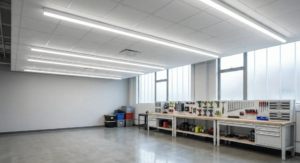
6500K produces a cool, daylight-style appearance. It can be suitable for garages, workshops, warehouses and areas where a cooler light is preferred.
For most residential projects, 3000K and 4000K are practical choices. The right colour temperature ultimately depends on the room, surrounding finishes and desired atmosphere.
How Important Is CRI for LED Strip Lights?
CRI stands for Colour Rendering Index. It indicates how accurately a light source shows colours compared with a reference light source.
For general lighting, CRI 80 or higher can be suitable. For kitchens, retail displays, artwork, products and premium interiors, CRI 90+ can provide better colour rendering.
If colour accuracy is important, check the manufacturer’s CRI specification before choosing your LED strip.
How to Choose the Right IP Rating
The IP rating indicates protection against dust and water.
Common LED strip ratings include:
| IP Rating | General Protection | Typical Use |
|---|---|---|
| IP20 | No water protection | Dry indoor areas |
| IP65 | Protected against water jets | Indoor and some sheltered outdoor applications |
| IP67 | Higher water and dust protection | Outdoor and wet-area applications |
| IP68 | Higher protection under specified conditions | Special outdoor or underwater applications where approved |
An important point is that the IP rating of the LED strip does not automatically make the entire lighting system waterproof.
Connectors, joins, end caps, cables, cable entries, controllers and power supplies also need suitable protection.
For outdoor installations, choose the complete system carefully and follow the manufacturer’s installation requirements.
You can view Vesta Lines options such as IP65 COB LED strip lights, IP67 COB LED strip lights and IP68 COB LED strip lights.
How to Choose the Right LED Strip Width
LED strip width is important because it determines which aluminium profile, connector and installation method you can use.
Common strip widths include 8mm, 10mm and 12mm.
Before ordering a profile or connector, measure the actual strip width.
For example, a 10mm LED strip requires compatible connectors and a profile with enough internal space.
This is especially important for waterproof strips because the silicone coating can increase the overall strip dimensions.
LED Strip Maximum Run Length and Voltage Drop
Voltage drop can affect LED strip performance, particularly on longer runs.
As the distance increases, the voltage at the far end of the strip can decrease. This may cause the end of the strip to appear dimmer than the beginning.
The actual maximum run depends on:
- LED strip voltage
- Wattage
- Strip design
- Copper thickness
- Installation method
- Power injection
- Cable size
- Manufacturer specifications
Do not assume that every 24V strip can run the same distance.
For long installations, consider the manufacturer’s maximum continuous run recommendation and whether power injection is required.
How to Choose the Right LED Strip Power Supply
The LED driver must match the LED strip voltage and provide enough power for the total load.
Use this basic calculation:
Total power = LED strip wattage per metre × total length
For example:
A 10W/m strip installed over 10 metres requires:
10W × 10m = 100W
It is good practice to allow some additional capacity rather than operating the power supply continuously at its maximum rating.
For example, Vesta Lines offers 24V LED drivers in different power ratings for LED strip applications.
Always check the manufacturer’s specifications and ensure the electrical installation complies with applicable Australian requirements.
Why Use an Aluminium Profile for LED Strip Lights?
An aluminium profile provides several benefits when installing LED strip lights.
It can:
- Help manage heat
- Protect the LED strip
- Improve the finished appearance
- Hold the strip securely
- Allow the use of a diffuser
- Provide a cleaner installation
Aluminium profiles are particularly useful for higher-wattage strips such as 15W/m and 20W/m.
For profile options, visit the Vesta Lines aluminium extrusion profile range.
How to Choose LED Strip Lights for Indoor Projects
Indoor applications provide many options because water protection may not be required.
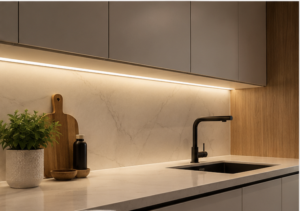
Kitchen LED Strip Lighting
LED strip lights are popular for:
- Under-cabinet lighting
- Above-cabinet lighting
- Kitchen kickboards
- Pantry lighting
- Joinery
- Display shelving
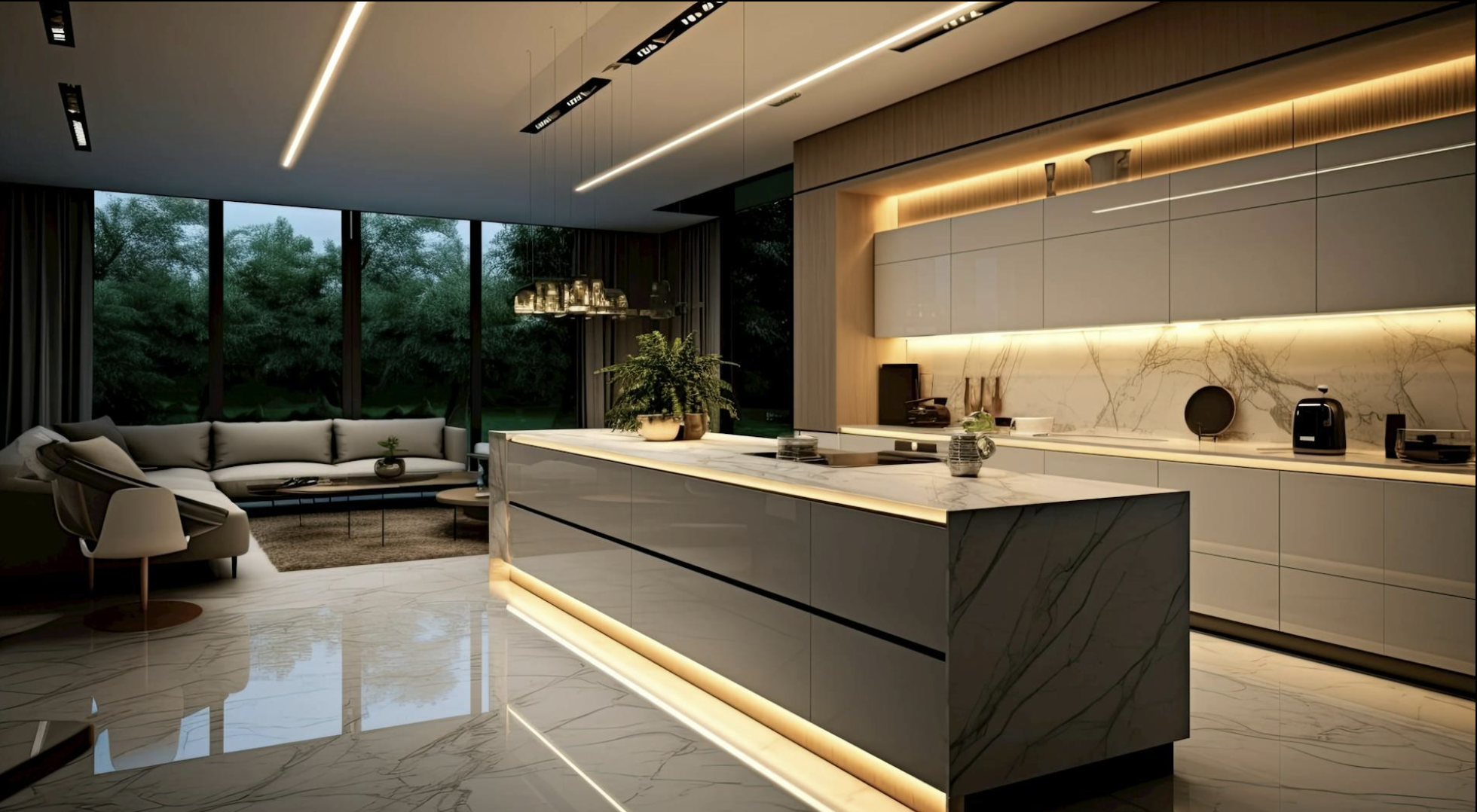
For kitchens, 3000K or 4000K are common choices. A COB strip can also provide a smooth appearance where the LEDs are visible.
Joinery and Cabinet Lighting
For cabinets and joinery, consider:
- Strip width
- Brightness
- Colour temperature
- CRI
- Profile size
- Heat management
- Available installation space
A lower-wattage strip may be suitable for decorative shelving, while a higher-output strip may be better for task or architectural lighting.
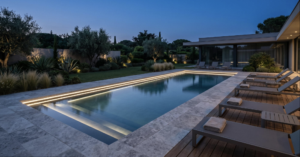
How to Choose LED Strip Lights for Outdoor Projects
Outdoor installations require additional planning.
First, consider the location and exposure to water, dust, sunlight and heat.
You may need an LED strip with a suitable IP rating, along with waterproof connectors and properly protected electrical components.
Remember that IP protection and UV resistance are not the same thing. A product may have water protection but still require consideration for direct sunlight and long-term outdoor exposure.
For outdoor installations, use products specifically designed for the environment and follow the manufacturer’s installation requirements.
LED Strip Lights for Commercial Projects
Commercial lighting projects often require higher output, longer runs and reliable heat management.
For these projects, consider:
- 24V systems
- Higher-output strips
- CRI 90+ where colour accuracy matters
- Aluminium profiles
- Suitable power supplies
- Voltage drop
- Power injection
- Dimming or smart control
- IP rating where required
COB LED strips can be useful for commercial applications where a continuous, professional appearance is important.
How to Calculate LED Strip Light Power Requirements
Calculating the total power requirement is simple.
Use:
Wattage per metre × total length = total LED power
For example:
15W/m × 8m = 120W
The LED strip requires approximately 120W.
You then need to select a compatible driver with sufficient capacity.
The driver voltage must match the LED strip voltage.
For example:
24V LED strip → 24V LED driver
Never connect a 12V LED strip to a 24V power supply.
Common LED Strip Lighting Mistakes to Avoid
When you choose LED strip lights, avoid these common mistakes:
Choosing Wattage Without Checking Light Output
Higher wattage does not automatically mean better lighting. Check lumens and the intended application.
Using the Wrong Voltage
A 12V strip and 24V strip require different power supplies.
Ignoring Heat Management
High-output strips can produce significant heat. Aluminium profiles can help manage operating temperature.
Choosing the Wrong IP Rating
An indoor IP20 strip is not suitable for every outdoor application.
Ignoring Voltage Drop
Long runs can experience voltage drop. Always check the manufacturer’s maximum run recommendations.
Using the Wrong Connectors
The connector must match the strip width, number of contacts and application.
You can view compatible options in the Vesta Lines LED strip connector range.
Cutting Waterproof LED Strip Without Resealing It
Cutting an encapsulated strip can affect its water protection. Follow the manufacturer’s instructions and properly reseal the strip where required.
LED Strip Light Buying Checklist
Before you purchase LED strip lights, check the following:
☐ Voltage – 12V or 24V
☐ Wattage per metre
☐ Lumens per metre
☐ COB or SMD technology
☐ Colour temperature
☐ CRI
☐ IP rating
☐ Strip width
☐ Maximum continuous run
☐ Voltage drop
☐ Aluminium profile
☐ LED driver
☐ Connectors
☐ Dimming or control requirements
☐ Indoor or outdoor location
This checklist makes it easier to choose LED strip lights that match your project.
Vesta Lines LED Strip Light Options
Vesta Lines offers LED strip lighting options for residential, commercial and architectural applications.
The range includes different wattages, colour temperatures, IP ratings and COB configurations.
For example, you can compare:
- 8W COB LED strip lights
- 10W COB LED strip lights
- IP65 COB LED strips
- IP67 COB LED strips
- IP68 COB LED strips
- 15W COB LED strips
- 20W COB LED strips
- RGB LED strips
- Aluminium profiles
- LED drivers
- LED strip connectors
Visit the Vesta Lines LED strip light collection to compare available products.
Frequently Asked Questions
What LED strip light should I choose?
The right LED strip depends on the application. Consider voltage, wattage, brightness, colour temperature, CRI, IP rating, maximum run and installation location before choosing a product.
Is 12V or 24V better for LED strip lights?
Neither is automatically better. A 24V system can be practical for larger installations because it draws less current for the same power. However, the maximum run depends on the specific LED strip.
What colour temperature is best for LED strip lights?
For residential applications, 3000K and 4000K are common choices. Choose 3000K for a warmer appearance and 4000K for a cleaner neutral appearance.
Are COB LED strip lights better than SMD?
COB LED strips can provide a smoother, more continuous appearance with fewer visible LED points. SMD strips can still be a good choice for many general lighting and decorative applications.
What IP rating do I need for outdoor LED strip lights?
The correct IP rating depends on the installation environment. Outdoor areas exposed to water generally require greater protection than dry indoor locations. The connectors and other components must also be suitable for the environment.
Do LED strip lights need an aluminium profile?
Not every LED strip requires a profile, but aluminium profiles are strongly recommended for many installations. They help with heat management, protection and appearance. Higher-wattage strips particularly benefit from proper heat dissipation.
How do I choose the right LED driver for LED strip lights?
First, match the driver’s voltage to the LED strip. Then calculate the total wattage of the installation and choose a driver with enough capacity for the load.
Conclusion
Knowing how to choose LED strip lights can help you achieve better lighting results and avoid common installation problems.
Start by identifying where the strip will be installed. Then consider the LED technology, voltage, wattage, brightness, colour temperature, CRI and IP rating.
For longer installations, also consider voltage drop, maximum run length, power injection and the correct LED driver. An aluminium profile can provide better heat management and a cleaner finish, particularly for higher-output LED strips.
Whether you need LED strip lights for a kitchen, joinery, cove lighting, stairs, retail display, commercial project or outdoor application, selecting the correct specification is essential.
If you are unsure which LED strip is suitable for your project, compare the Vesta Lines LED strip light range or contact the Vesta Lines team for product guidance.