How Long Do LED Strip Lights Last?
LED strip lights are a popular choice for homes, shops, offices, restaurants and commercial projects. But how long do LED strip lights last?
The LED strip lifespan depends on several factors, including LED quality, operating temperature, wattage, installation, power supply, heat management and how many hours the strip is used each day.
A good-quality LED strip can provide many years of useful lighting when it is installed and operated correctly. However, the strip does not usually reach the end of its useful life because every LED suddenly stops working. Instead, light output gradually decreases over time.
In this guide, we explain how long LED strip lights can last, what affects their lifespan and how to get the best long-term performance from your LED strip lighting.
How Long Do LED Strip Lights Last?
Many LED lighting products are advertised with lifespans such as 30,000, 50,000 or 60,000 hours. However, the actual lifespan depends on the product design, components, operating conditions and installation.
For LED lighting, useful life is often linked to lumen maintenance. This refers to how much light the LED continues to produce compared with its original output.
The Australian Energy Rating program explains that LED useful life can be assessed using lumen depreciation, with L70 commonly referring to the point where light output has fallen to around 70% of its initial level.
This means an LED strip does not necessarily become useless when it reaches its stated lifetime. Instead, the light output may gradually become lower.
What Does 50,000 Hours Mean?
A 50,000-hour rating sounds impressive, but it is useful to put the number into everyday use.
| Daily Use | Approximate Years for 50,000 Hours |
|---|---|
| 4 hours per day | 34 years |
| 6 hours per day | 23 years |
| 8 hours per day | 17 years |
| 10 hours per day | 14 years |
| 12 hours per day | 11 years |
| 24 hours per day | 5.7 years |
These figures are simple operating-time calculations. They do not guarantee that a particular LED strip will maintain its original brightness for the entire period.
What Affects LED Strip Lifespan?
Several factors can affect how long LED strip lights last.
The most important factors include:
- LED quality
- Heat management
- Strip wattage
- Power supply quality
- Correct voltage
- Installation method
- Aluminium profile selection
- Operating environment
- Daily operating hours
- Moisture and exposure to the elements
- Correct electrical installation
Understanding these factors can help you choose a strip that is suitable for your project.
1. LED Quality
The quality of the LED strip has a major effect on long-term performance.
Low-quality LED strips may use lower-grade LED chips, resistors, PCB materials, adhesives and other components. These components can affect light output, colour consistency and reliability.
A quality LED strip should be selected based on more than its advertised wattage or price.
When comparing products, consider:
- LED type
- Power consumption
- Light output
- CRI
- Colour consistency
- PCB construction
- Operating temperature
- Warranty
- Recommended installation method
- Manufacturer specifications
For professional projects, it is important to choose a product designed for the intended application rather than simply choosing the cheapest strip.
2. Heat Is One of the Biggest Factors
Heat is one of the most important considerations when installing LED strip lights.
LEDs produce heat while operating. If this heat cannot escape efficiently, the temperature of the LED strip can increase.
Higher operating temperatures can accelerate lumen depreciation and shorten useful life. Australian lighting guidance specifically identifies high operating temperatures and poor heat dissipation as factors that can contribute to faster lumen depreciation.
This is why aluminium profiles are so important for many LED strip installations.
Why Use an Aluminium Profile?
An aluminium profile can:
- Help transfer heat away from the LED strip
- Protect the strip from physical damage
- Improve the appearance of the installation
- Provide a mounting surface
- Allow a diffuser to be installed
- Help create a cleaner continuous lighting effect
For higher-output LED strips, such as 15W/m or 20W/m products, proper thermal management becomes particularly important.
3. LED Strip Wattage
Wattage is another important factor.
Higher-wattage LED strips can produce more light, but they can also generate more heat.
For example, a low-power 8W/m strip and a high-output 20W/m strip have different thermal and power requirements.
This does not mean that a higher-wattage strip is a worse product. It simply means the installation needs to be designed correctly.
For high-output LED strips, an aluminium profile with good heat dissipation is strongly recommended.
4. The Power Supply Can Affect Performance
The power supply, or LED driver, is an important part of the lighting system.
A 24V LED strip should be powered by a suitable 24V constant-voltage power supply.
The driver should have enough capacity for the total connected load.
For example:
10m × 10W/m = 100W
In this example, the LED strip requires approximately 100W. The power supply should therefore have suitable additional capacity rather than being operated continuously at its maximum rating.
An incorrectly sized or poor-quality power supply can cause problems such as:
- Flickering
- Voltage instability
- Excessive heat
- Reduced performance
- Premature component failure
Never connect a 12V LED strip to a 24V power supply.
5. Correct Voltage Matters
LED strips are available in different voltage options, including 12V and 24V.
For longer installations, 24V LED strips are often a practical choice because the same power requires less current than a 12V system.
For example:
120W ÷ 12V = 10A
120W ÷ 24V = 5A
Lower current can make cable sizing and voltage-drop management easier.
However, the maximum recommended run still depends on the specific LED strip. Always follow the manufacturer’s installation instructions.
For more information, see our guide to 24V vs 12V LED strip lights.
6. Aluminium Profiles Can Help Extend LED Strip Life
Installing LED strip lights directly onto a surface is suitable for some low-power applications. However, higher-output strips often benefit from an aluminium profile.
The aluminium acts as a heat-spreading surface.
This is particularly important for:
- 15W/m LED strips
- 20W/m LED strips
- Long operating hours
- Commercial installations
- Enclosed joinery
- Recessed installations
- Architectural lighting
A profile also provides a more professional finish.
For example, a diffuser can soften the light and help create a smooth linear appearance.
Explore our range of LED aluminium extrusion profiles for different installation requirements.
7. COB vs SMD LED Strip Lifespan
Both COB and SMD LED strips can provide long service life when they are designed and installed correctly.
The LED technology itself should not be the only factor used to judge lifespan.
COB LED Strip Lights
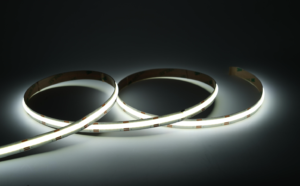
COB stands for Chip on Board.
COB strips have many LED chips mounted closely together, creating a more continuous light source.
Benefits can include:
- Smooth, dot-free appearance
- High LED density
- Excellent for visible installations
- Suitable for profiles and architectural lighting
- Good option for continuous linear lighting
SMD LED Strip Lights
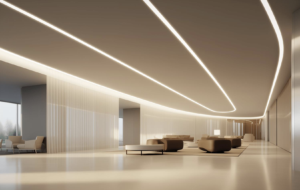
SMD stands for Surface Mounted Device.
SMD strips use individual LED packages mounted along the PCB.
They are available in many configurations and power levels.
When choosing between COB and SMD, consider the application’s brightness, appearance, thermal requirements and installation method.
8. How Many Hours Per Day Will the Strip Run?
Daily operating time has a direct effect on how quickly the strip reaches its total operating hours.
A kitchen cabinet light that operates for three or four hours each day will accumulate operating hours much more slowly than a commercial installation operating for 12 hours every day.
For example:
4 hours/day × 365 days = 1,460 hours/year
At this usage level:
50,000 ÷ 1,460 ≈ 34 years
However, the calculated period should not be treated as a guaranteed service life. Environmental conditions, thermal management and product quality also matter.
9. Indoor vs Outdoor LED Strip Lifespan
The environment can have a significant effect on LED strip performance.
Indoor installations generally provide easier conditions because the strip is protected from rain, direct weather exposure and large temperature changes.
Outdoor installations require greater consideration.
Depending on the application, you may need:
- Appropriate IP rating
- Waterproof connections
- Suitable power supply
- Aluminium profile
- UV-resistant materials
- Protection from direct sunlight
- Correct sealing
- Suitable cable connections
An IP rating alone does not automatically make an entire LED lighting system waterproof.
The strip, connectors, joins, power supply and installation method all need to be suitable for the environment.
10. Does IP Rating Affect LED Strip Lifespan?
Yes, the environment in which the strip operates can affect its service life.
Common LED strip ratings include:
| IP Rating | Typical Application |
|---|---|
| IP20 | Dry indoor areas |
| IP65 | Areas requiring protection from dust and water spray |
| IP67 | More demanding indoor or outdoor applications |
| IP68 | Specific applications requiring higher water protection |
The exact protection provided depends on the construction and manufacturer’s specifications.
For outdoor applications, do not select a strip based only on the IP number. Consider UV exposure, heat, water, connectors, installation location and sealing.
11. Voltage Drop Can Affect Long LED Strip Runs
Long LED strip installations need careful planning.
As the length of the installation increases, voltage drop can cause the strip to become dimmer towards the end of the run.
This can create uneven lighting.
Signs of voltage-drop problems can include:
- Brighter light near the power connection
- Dimmer light further along the strip
- Uneven brightness
- Colour changes on some products
For long installations, the system may require multiple power feeds or separate sections.
The correct solution depends on the LED strip, wattage, installation length and wiring arrangement.
12. Why High-Quality Installation Matters
Even a high-quality LED strip can have problems if it is installed incorrectly.
Common installation mistakes include:
- Using the wrong voltage
- Undersizing the power supply
- Poor electrical connections
- Insufficient heat dissipation
- Installing high-wattage strips without suitable thermal management
- Exceeding recommended run lengths
- Poor waterproofing
- Using unsuitable connectors
- Installing the strip in an unsuitable environment
Correct installation is therefore just as important as selecting a quality LED strip.
How Can You Make LED Strip Lights Last Longer?
If you want to maximise LED strip lifespan, follow these practical steps.
1. Choose a quality LED strip
Select a product with suitable LED technology, construction and performance specifications.
2. Use the correct power supply
Match the power supply voltage to the LED strip.
3. Allow enough power capacity
Avoid continuously operating the power supply at its maximum rated capacity.
4. Manage heat
Use an aluminium profile where recommended, particularly for higher-output strips.
5. Follow the recommended maximum run
Do not assume that every LED strip can run continuously for the same distance.
6. Plan power injection correctly
Long runs may require multiple power feeds.
7. Use suitable connectors
For outdoor applications, use connectors and connections suitable for the environment.
8. Protect outdoor installations
Choose the appropriate IP rating and protect the system from unnecessary UV, heat and water exposure.
9. Follow the manufacturer’s specifications
Always follow the installation instructions for the specific LED strip.
Does Switching LED Strip Lights On and Off Reduce Their Life?
LED lighting generally does not suffer from the same switching-related limitations associated with some older lamp technologies.
However, the complete lighting system still contains other components, such as power supplies and controllers.
For this reason, it is important to consider the complete system rather than looking only at the LED chips.
The main concern for LED performance is generally long-term lumen maintenance and operating conditions rather than simply counting how many times the strip is switched on and off. DOE research notes that LED products often experience gradual changes in light output or colour rather than simply failing abruptly.
How Long Do LED Strip Lights Last in a Kitchen?
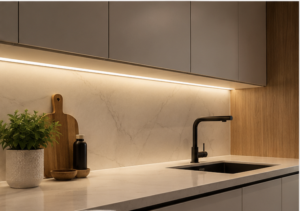
Kitchen LED strip lights can last for many years when correctly installed.
Common applications include:
- Under-cabinet lighting
- Overhead cabinets
- Kitchen kickboards
- Shelving
- Pantry lighting
- Joinery
- Benchtop accent lighting
For visible installations, COB LED strip lights can be a good choice because they provide a smoother, more continuous appearance.
For kitchen applications, 3000K or 4000K are popular choices depending on the desired atmosphere.
How Long Do LED Strip Lights Last in Commercial Applications?
Commercial LED strip lighting can operate for long periods each day.
Examples include:
- Retail stores
- Restaurants
- Hotels
- Offices
- Shopping centres
- Display cabinets
- Signage
- Architectural features
Because commercial lighting can operate for many hours every day, thermal management and power supply selection become especially important.
A well-designed commercial installation should consider the LED strip, aluminium profile, driver, wiring, controls and operating environment as one complete system.
How Do You Calculate LED Strip Running Cost?
Although lifespan is important, energy consumption is also worth considering.
For example, a:
10W/m LED strip × 10m = 100W
If it operates for 8 hours per day:
100W × 8 hours = 800Wh
This equals:
0.8kWh per day
Actual running cost depends on the electricity tariff.
When comparing LED strips, look at both wattage and light output. Energy Rating Australia recommends considering lumens rather than watts alone when comparing lighting brightness.
LED Strip Lifespan: Common Mistakes to Avoid
Choosing based only on price
The cheapest strip is not always the best long-term option.
Ignoring heat
High-output LED strips need appropriate thermal management.
Using the wrong driver
Always match the voltage and power requirements.
Running excessively long sections
Long runs can experience voltage drop and uneven brightness.
Ignoring the environment
Outdoor and wet locations require appropriate products and installation methods.
Assuming IP rating solves everything
An IP rating applies to the relevant product component. The entire system still needs suitable installation.
Choosing wattage instead of light output
Higher wattage does not automatically mean better lighting.
LED Strip Lifespan Checklist
Before purchasing LED strip lights, check:
- LED type
- Rated lifespan
- Lumen output
- Wattage per metre
- Voltage
- Colour temperature
- CRI
- IP rating
- Maximum recommended run
- Power supply
- Aluminium profile requirements
- Operating environment
- Installation method
- Warranty
This checklist can help you select the right LED strip for your project rather than choosing based on price alone.
Vesta Lines LED Strip Lights
At Vesta Lines Lighting, we offer a range of LED strip lighting options for residential, commercial and architectural applications.
Our range includes:
- COB LED strip lights
- SMD LED strip lights
- 24V LED strip lights
- 8W, 10W, 15W and 20W options
- Indoor LED strips
- IP65 LED strips
- IP67 LED strips
- High-CRI options
- Different colour temperatures
- Aluminium extrusion profiles
- LED drivers and power supplies
- LED strip connectors and accessories
You can explore our LED strip light range to compare different products and specifications.
For high-output installations, selecting the correct aluminium profile and power supply is an important part of the design.
Frequently Asked Questions
How long do LED strip lights last?
The lifespan varies by product and installation. Many LED products are rated for tens of thousands of hours. However, useful life depends on lumen maintenance, temperature, product quality and operating conditions.
Do LED strip lights burn out?
LED strips can eventually fail, but they often experience gradual reduction in light output before complete failure. LED lifetime is commonly assessed through lumen maintenance rather than simply waiting for the strip to stop producing light.
Does heat reduce LED strip lifespan?
Yes. High operating temperatures can accelerate lumen depreciation and reduce useful life. Good heat management is particularly important for high-output LED strips.
Does an aluminium profile make LED strips last longer?
An aluminium profile can help transfer heat away from the LED strip. This can be particularly useful for higher-wattage LED strips, although the actual performance depends on the strip, profile and installation.
Are COB LED strips longer-lasting than SMD strips?
Not necessarily. Lifespan depends on the quality and design of the complete LED strip. Both COB and SMD products can provide long service life when correctly designed and installed.
How long do LED strips last when used 8 hours a day?
If a product is rated at 50,000 operating hours, 8 hours per day equals approximately 17 years of operating time. This is a mathematical conversion, not a guarantee of actual useful life.
Can LED strip lights be left on all night?
Some LED strips can operate for extended periods, but continuous operation increases total operating hours and makes heat management more important. Always follow the manufacturer’s specifications.
Do 24V LED strips last longer than 12V LED strips?
Voltage alone does not determine LED strip lifespan. Product quality, heat management, power supply, current, installation and operating conditions are more important factors.
What is the best way to extend LED strip lifespan?
Use a quality LED strip, the correct power supply, suitable wiring and good thermal management. For higher-output strips, an aluminium profile can help manage heat.
Conclusion
So, how long do LED strip lights last?
A quality LED strip can provide many years of useful lighting, but its actual lifespan depends on how it is designed, installed and operated.
The most important factors are LED quality, heat management, correct power supply, voltage, wattage, installation, operating hours and environmental conditions.
For the best long-term result, choose the right LED strip for the application and treat the strip, driver, wiring and aluminium profile as one complete lighting system.
If you are planning a residential, commercial or architectural LED strip lighting project, choosing the correct product at the design stage can help deliver better brightness, reliability and long-term performance.