Why Builders and Architects Are Switching to Architectural LED Strip Lighting
A New Standard in Modern Residential Construction
As residential design continues to evolve, lighting is no longer treated as a final decorative element. Today, builders and architects integrate lighting into the structure from the early planning stages.
Architectural LED strip lighting has quickly become the preferred solution for modern homes due to its flexibility, clean appearance, and ability to deliver consistent illumination without visible fixtures.
Projects like the Bossley Park residence demonstrate how a property can achieve complete functional lighting using only professionally designed LED strip systems.
Lighting as Part of Architecture — Not an Addition
Traditional lighting relies on downlights, pendants, and surface fixtures added after construction. While functional, these solutions often interrupt ceiling lines and limit design freedom.
Architectural strip lighting allows professionals to:
- Integrate lighting within ceilings and walls
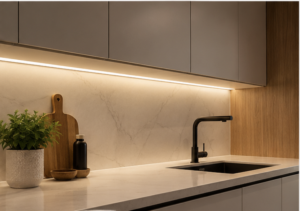
- Highlight architectural features
- Create continuous light lines
- Maintain minimalist design concepts
This approach aligns perfectly with modern architectural trends focused on simplicity and clean geometry.
Early Collaboration Improves Project Outcomes
One key reason builders are adopting LED strip systems is the advantage of early lighting planning.
When lighting design is coordinated with construction drawings:
- Correct lumen levels are calculated per room
- Electrical layouts become more efficient
- Installation time is reduced
- Rework and site changes are minimized
Early collaboration between lighting designers, builders, and electricians ensures predictable results and smoother project delivery.
Precision Installation for Premium Finishes
High-end residential projects demand flawless finishing.
Professional LED strip installations use aluminium extrusion profiles embedded within gyprock structures to achieve:
- Straight and uniform light output
- Seamless corners and junctions
- Invisible light sources
- Long-term structural stability
Accurate cutting and alignment are essential to maintain architectural continuity throughout the space.
Performance Matters: Engineering Behind the Lighting
Successful strip lighting projects depend on technical engineering, not only aesthetics.
Key considerations include:
- Proper wattage selection per metre
- Voltage drop management
- Connector quality
- Heat dissipation
- Driver accessibility
In advanced projects, drivers are centralized inside dedicated service cabinets, allowing future maintenance without damaging ceilings or walls — a major advantage for builders handing over long-term quality homes.
Indoor and Outdoor Integration
Architectural lighting must transition smoothly between indoor and outdoor environments.
Using different protection ratings ensures performance:
- IP20 LED strips for internal applications with maximum efficiency
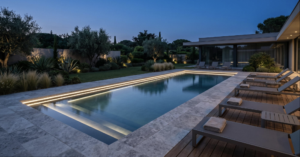
- IP65 LED strips for outdoor areas requiring moisture protection
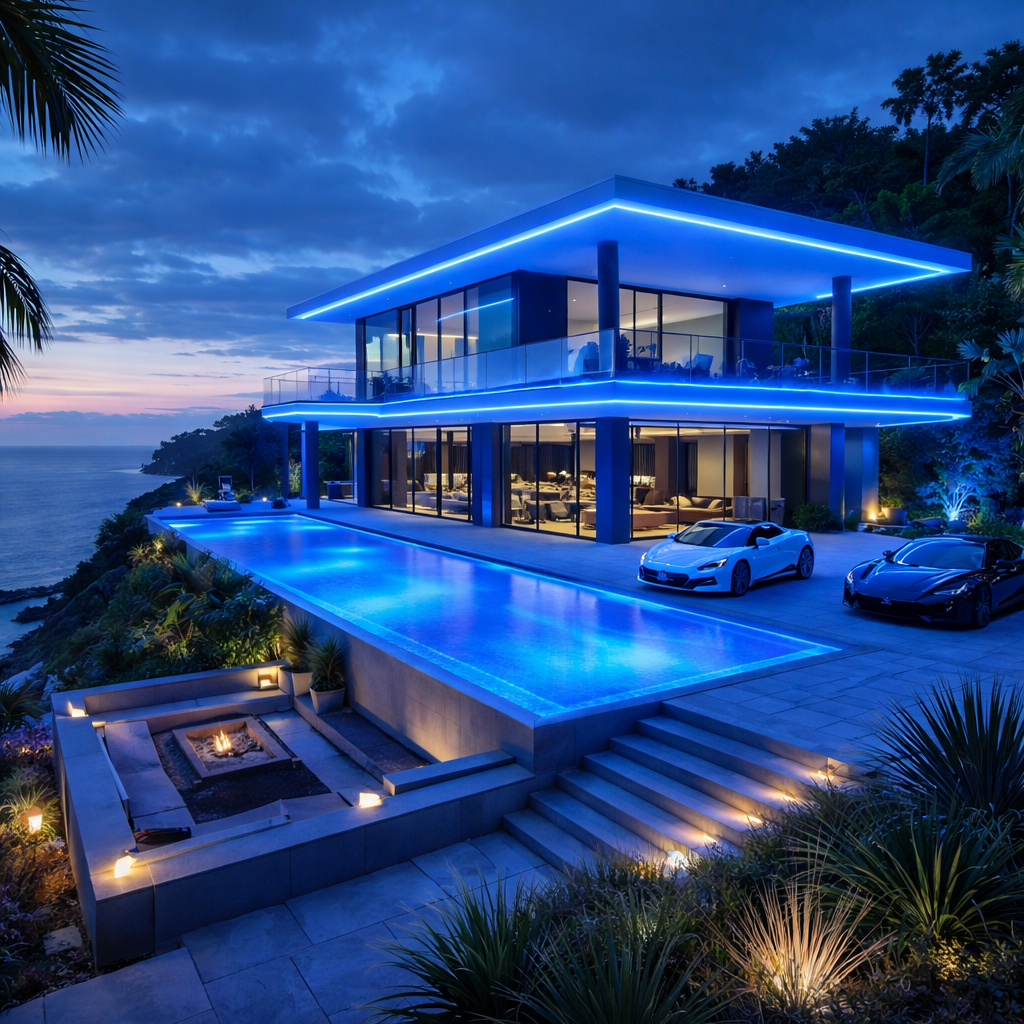
Maintaining consistent light quality across both environments enhances the overall architectural experience.
Benefits for Builders and Developers
Builders adopting integrated LED strip lighting gain several advantages:
✔ Higher perceived property value
✔ Modern luxury presentation
✔ Reduced fixture clutter
✔ Energy-efficient solutions for clients
✔ Competitive differentiation in the market
Lighting design has become a selling feature rather than just a technical requirement.
A Smarter Future for Residential Lighting
As architectural expectations rise, integrated lighting solutions are becoming standard in premium residential construction.
LED strip lighting provides the flexibility, performance, and visual impact required by modern architecture while simplifying long-term maintenance.
For builders and architects seeking refined results, early lighting design collaboration is no longer optional — it is essential.